

Steel Storage Rack for Precast Components
Steel Storage Rack for Precast Components
Special‑Purpose Storage Equipment for Prefabricated Construction Industry Product Brochure
1. Product Introduction
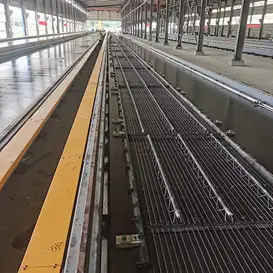
The Steel Storage Rack for Precast Components is specialized storage equipment used in precast concrete (PC) production plants and on construction sites. It is designed for the layered, stacked, and categorized storage of precast concrete elements (wall panels, composite floor slabs, stairs, balconies, bay windows, tunnel segments, curbs, U‑shaped / oval drainage trench units, etc.), cement products, and heavy steel materials / raw materials. Manufactured from high‑strength structural steel (Q235B / Q345B / Q390B) via CNC cutting, precision welding, stress relief, machining, and surface treatment processes.
As the load‑bearing skeleton for vertical / horizontal storage of precast elements, the steel rack provides a stable, ventilated, and reusable storage reference, preventing bottom‑face damage, cracking, and deformation caused by flat stacking and superimposed loads. Its layer height, layer load, span, and layout can be customized based on component self‑weight, geometry, lifting method, and site conditions. It is a key piece of equipment linking the logistics chain of"factory production — curing — transfer — on‑site installation". Various standard‑size racks are available; we cut and weld steel plates calculated according to client requirements, offering both brand‑new racks and refurbished second‑hand racks.
2. Product Parameters & Specifications
Typical parameter ranges are shown below. Final specifications shall be determined by FEA structural calculation according to component dimensions, storage quantity, unit self‑weight and site load. Custom parameter sheets and load‑bearing verification reports are available.
| Parameter Category | Typical Specification / Range | Description |
|---|---|---|
| Product Type | Vertical Rack / Horizontal Rack / A‑Frame / Cantilever Rack / Tiered Lattice Rack | Selected per component shape & lifting method |
| Applicable Components | Wall panels, slabs, stairs, balconies, bay windows, segments, curbs, trench units, sections, steel plates | For PC plants & sites |
| Rack Material | Q235B / Q345B / Q390B / 16MnDR (low‑temp) / Stainless (corrosive env.) | Per working condition |
| Upright / Main Frame | I‑beam / RHS / H‑beam; section per layer‑load calculation | Stress‑relieved after welding |
| Deck / Bracket Beam | 8–25 mm steel deck plate / heavy‑duty channel bracket | Per span & layer load |
| Layer Load | 2–20 t (uniform/point load, per design) | Optimized after FEA |
| Layers / Layer Height | 2–6 layers; layer height 300–2000 mm adjustable | Per component height |
| Overall Size (L×W×H) | Custom 2m–12m × 1.2m–3m × 2m–6m | Per site & component size |
| Surface Treatment | Sa2.5 Blasting + Zinc‑rich Epoxy Primer + Topcoat / HDG / Powder Coating RAL | Anti‑corrosion per environment |
| Connection | Bolted / Welded / Pin‑connected (detachable) | Modular for transport & assembly |
| Optional Features | Rubber anti‑scratch pads, component spacers, sling guides, wheeled base, RFID tracking | Per process needs |
| Mobility | Fixed / Wheeled movable (heavy‑duty caster + brake) | Per site layout |
| Service Life | ≥10 years (normal use + maintenance) | Far exceeds wood / simple steel racks |
3. Product Usage Instructions
- Installation & Positioning: Lay‑out and locate according to site drawing. Anchor column bases to hardened concrete floor (≥C20) by anchor bolts or welded stops. Calibrate column verticality ≤H/1000 and overall levelness; install bracket beams and decks layer‑by‑layer and fully tighten connection bolts.
- Component Storage: Store components by ID, specification and batch in separate zones. Place wall panels and slabs vertically inside A‑frames or vertical racks with tilt angle ≤5°. Fit rubber pads or spacers between components to avoid collision. Never exceed rated layer load; distribute concentrated loads evenly across bracket beams.
- Lifting Access: Adopt tower crane / overhead crane / parallel lifting beam plus dedicated lifting tools such as vacuum cups, spreader beams or webbing slings. Lift vertically along rack aisles. Oblique pulling and rack‑column collision are strictly forbidden. Set warning zones and assign certified signalman for lifting operations.
- Stacking Management: Neatly stack components of identical type; stacking height shall not exceed designed rack layers. Maintain minimum 100 mm clearance between component edges and rack outer columns to guarantee sling working space.
- Routine Maintenance: Clear debris every shift. Weekly inspect weld integrity, bolt pre‑tension, column verticality and deck deflection. Calibrate load marking monthly. Perform UT/MT weld inspection and full anti‑rust recoating annually. Use wooden sleepers plus tarpaulin protection for outdoor storage.
4. Application Scenarios
- PC Plant Storage Yard: Zoned storage of wall panels, slabs, stairs, balconies and bay‑windows after curing; select vertical A‑frame or tiered lattice rack.
- PC Production Line Side: Inter‑process buffer storage for pending‑inspection and pending‑shipment precast elements; adopt fixed tiered racks.
- Construction Site Yard: Vertical storage for incoming precast parts before erection; movable or fixed vertical racks are available.
- Municipal / Traffic Works: Store curbs, corridor wall panels, bridge barriers, U‑oval trench precast units; use horizontal tier rack or cantilever rack.
- Rail Transit / Segment Storage: Vertical storage for subway tunnel segments preventing arc‑surface damage; apply dedicated segment A‑frame.
- Heavy Industry / Steel Storage: Classified storage for sections, steel plates, molds and heavy raw materials; choose cantilever or heavy‑duty tier rack.
- Overseas PC Plant / Project: Standard rack solution for containerized mini‑plants and modular production lines; modular bolt‑connected racks recommended.
5. Safety Precautions
5.1 Load & Lifting Safety
- Never exceed rated layer load or total rack load; spread concentrated loads evenly to avoid eccentric loading; clearly post layer‑load nameplates on racks.
- Oblique pulling and collision against uprights or decks during lifting are strictly prohibited; set warning zones with certified signalman; sling included angle α ≤60°.
5.2 Structure & Stacking Safety
- Regularly inspect column verticality, weld condition, bolt pre‑load and deck deflection. Immediately take racks out‑of‑service for repair if bulging, cracking or heavy corrosion occurs.
- Stack height shall not exceed designed layers; keep component edges ≥100 mm away from outer columns. Fit anti‑tipping bracing or ties for components prone to overturning.
- Unified command for multi‑person installation work to prevent crush injuries; ensure firm support when using hydraulic jacks.
5.3 Outdoor‑Wind & Anti‑Corrosion Safety
- Outdoor racks shall be wind‑load verified. Stop lifting and high‑risk component storage under Beaufort 6 wind (≥10.8 m/s); add wind bracing or reduce stacking height.
- Inspect paint and galvanized coating periodically; touch‑up damaged areas promptly. Upgrade anti‑corrosion grade or select stainless‑steel version for coastal and chemical‑exposed sites.
5.4 Hot‑Work & Site Storage Safety
- Permit and fire‑fighting equipment are required for hot‑work inside rack zones; clear combustibles and pipelines before welding repair.
- Reserve aisle width ≥ component length +1 m; mount height‑limit and load‑limit signs; do not hang extra unrelated loads onto rack frames.
6. OEM & ODM Customization Services
We provide end‑to‑end customization from structural calculation and scheme design to manufacturing and delivery, meeting global clients' diverse needs:
- Size & Layout Customization: Custom rack dimension length 2‑12 m × width 1.2‑3 m × height 2‑6 m with 2‑6 layers, according to component specification, storage quantity, site dimension and lifting equipment.
- Material Upgrade: Optional Q345B, Q390B, 16MnDR for low‑temperature condition, stainless‑steel for heavy‑corrosion environment.
- Rack‑Type Customization: Vertical rack, horizontal rack, A‑frame, cantilever rack, tiered lattice rack, special‑purpose segment A‑frame, movable wheel‑equipped rack.
- Surface Treatment: Epoxy coating, HDG hot‑dip galvanizing, RAL‑color powder coating, Teflon film for anti‑stick & easy‑clean purpose.
- Functional Integration: Rubber anti‑scratch pads, component spacers, sling guides, wheeled moving base, RFID tracking interface, layer‑load sensor options.
- Connection & Transport: Modular bolted / pin‑detachable design for container shipment and on‑site assembly; supply assembly drawings and technical guidance.
- Second‑hand Rack Service: Evaluation, refurbishment (weld‑milling + full repaint), inspection report and 6‑12‑month warranty for standard & non‑standard used racks.
- Branding & Packaging: Laser‑engrave customer logo, serial number, layer‑load nameplate and safety warnings on prominent positions. Export‑grade anti‑rust packing plus container‑optimized loading. Oversized racks shipped in sections with field assembly guidance.
7. Why Choose Us?
- Industry Expertise: 10+‑year R&D and manufacturing experience for steel storage racks, molding tables and formworks; serving over 20 countries, more than 3 000 sets delivered including new and refurbished units.
- Structural Safety: In‑house structural engineering team; every rack passes FEA load analysis and bearing‑capacity verification with calculation report; UT/MT weld flaw‑detection implemented.
- Precision Manufacturing: In‑house CNC machining center, large gantry mill & automatic welding lines; column verticality and layer‑height tolerance ≤2 mm, exceeding simple‑rack industry standards.
- Quality Assurance: ISO 9001‑certified. Pre‑shipment inspection includes CMM / total‑station measurement, static‑load test, weld NDT and coating performance test for every rack.
- Global Service: 7×24‑hour technical support, 48‑hour after‑sales response; provide on‑site installation guidance, operator training, rack refurbishment and reinforcement service.
- Cost Advantage: Factory‑direct new racks plus cost‑effective refurbished alternatives (approx. 40%‑60% price of new goods). Modular design lowers transportation and maintenance expenses.