
Localized Modular Construction: Lessons from OBD's Five Decades of Prefabricated Going-Concern
Localized Modular Construction: Lessons from OBD's Five Decades of Prefabricated Going-Concern
—— A Contrast with Hong Kong's MiC for High-Density Rental Housing
Recommendation note: Prefabricated and modular construction has been discussed for years, yet its success or failure is often decided by the single phrase “going concern.” Russia's OBD and Hong Kong's MiC both follow a prefabricated/modular path, but in different directions—one has spent five decades weaving modular construction into the everyday life of the Kuban region; the other is making a newer attempt in public rental housing within a high-density city. As a professional team devoted to prefabricated construction technologies, Shenzhen Wanzhong Xinghua Construction Technology Co., Ltd. shares this contrast from the perspective of a seasoned prefabrication expert, for the industry's reference and study.
The story of modular construction should not be told only by “starting early,” but also by “whether it can keep going.” OBD (АО СЗ «ОБД», formerly ЗАО «ОБД»; Russian: Объёмно-блочное домостроение, i.e. volumetric-block house building) has operated since 1974 and is a leading modular-building enterprise in Russia and the Krasnodar region. Hong Kong's MiC (Modular Integrated Construction), by contrast, brings modular integrated construction into public rental housing within a land-scarce, high-density metropolis. Both tell a “modular” story, yet their paths and substance differ.
1. OBD: A Half-Century Sample of Localized Prefabrication
In the full fifty years from 1974 to 2025, OBD produced and built 8.5 million square metres of housing, and 455,000 residents of the Kuban own and use its products. In 1974, the US “Housing Breakthrough Program” still counted housing in “units”; only systems like the then-Soviet one measured in square metres—and OBD is exactly a practitioner of this industrialized building paradigm that delivers at scale by area. Today the company still has the capacity to produce about 260,000 m² of reinforced-concrete products per year, used for housing, villa communities and social facilities.
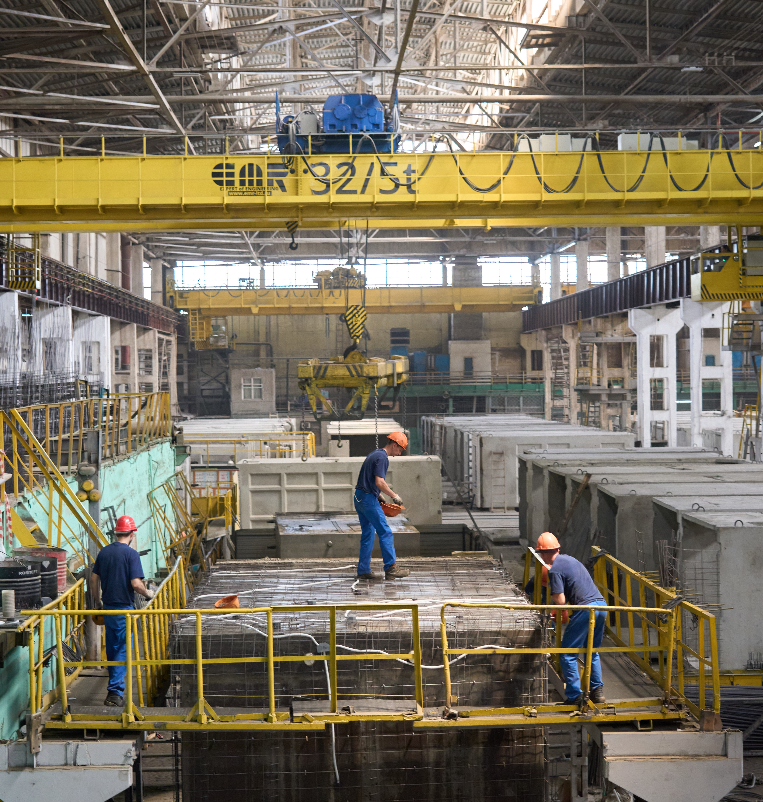
Fig. 1 The OBD plant: a production shop for reinforced-concrete prefabricated components
For OBD, a modern enterprise is not merely a business model. It holds that people are, first of all, professionals who create high-quality products, rather than mere “executors.” Generations of OBD employees regard the company as a “local” enterprise, because much of their lives is closely tied to this plant. With a large team (about 1,000 people), it contributes millions of roubles in taxes to the region every month and provides affordable housing products; locally—especially to veterans of the Great Patriotic War, servicemen, orphans affected by adverse conditions, and people in difficulty—OBD is often the first to lend a hand.
Deeper still is its resilience. OBD has 50 years of history in the region's construction industry; having passed through every test the country experienced and every change of ownership, the factory continues to operate—a symbol of industrial resilience and of the ability to build an effective business model.
2. Half a Century of One Plant: The OBD Development Chronology
From plant construction to a modern specialized developer, OBD's chronology outlines a complete and continuous path of prefabricated industrialization.
Table 1 OBD development chronology (1972–2025)
|
Year |
Key milestone |
|
1972 |
Construction of the volumetric modular-housing factory began in the Krasnodar industrial zone; first plant director — Chaika Igor Ivanovich |
|
1974 |
Became a leading enterprise in the construction industry of Krasnodar Krai; began producing volumetric modules for БКР-2-series residential buildings with an annual capacity of 108,000 m² (Decree No. 282 of the USSR Ministry of Industrial Construction, 24 December 1974); produced the first assembled room |
|
1975 |
First modular assembled residential building completed in the Festivals (Prazdnichny) neighborhood |
|
1979 |
Transport-line (flow-line) workshop completed |
|
1984 |
Cumulative 1,000,000 m² of housing built |
|
1990 |
Planned economy abolished; output fell threefold; employee loyalty and management flexibility kept the plant alive |
|
1991 |
Construction-and-installation division established |
|
2005 |
Modernization completed with investment of over RUB 800 million; capability to build 16-storey modular residential buildings to seismic degree 8 |
|
2010 |
Customer-service department established; capability for detached villas developed; polystyrene-foam production workshop opened with capacity of 100,000 m³ |
|
2014 |
First year completing 4,000 dwellings |
|
2017 |
Plant's share of housing delivered in the Krai reached 4% — the best result among developers in the Southern Federal District |
|
2019 |
First social facility delivered — a school for 1,550 students on Vostochno-Kruglikovskaya Street, Krasnodar; 190,000 m² of products produced |
|
2023 |
School completed in Plodorodny settlement; production expanded into other regions; legal form changed to “specialized developer” АО СЗ «ОБД»; joined the national “Labor Productivity” project |
|
2025 |
Reconstruction of the moulding-and-assembly workshop began |
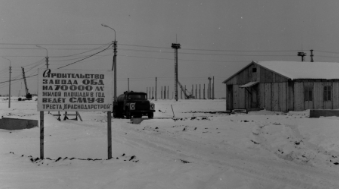
Fig. 2 An early historical photograph of the plant (building-materials trade)
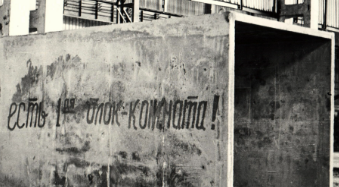
Fig. 3 OBD's first assembled room (a volumetric module)
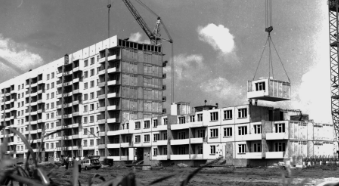
Fig. 4 Prefabricated-panel high-rise housing construction in the Soviet era
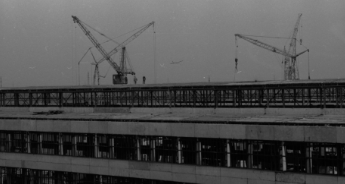
Fig. 5 A production scene showing the plant's capacity and product output
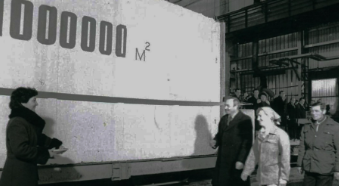
Fig. 6 Prefabricated high-rise construction: tower cranes and a building under construction
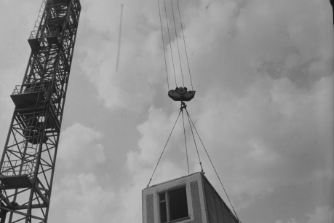
Fig. 7 A tower crane lifting a precast-concrete module
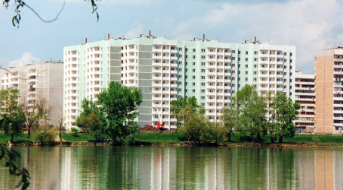
Fig. 8 A modular high-rise residential community (waterside view)
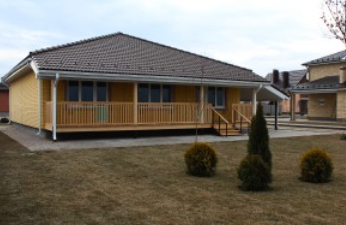
Fig. 9 A detached modular house (villa product capability)
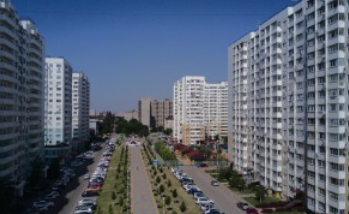
Fig. 10 A modern high-rise residential neighborhood
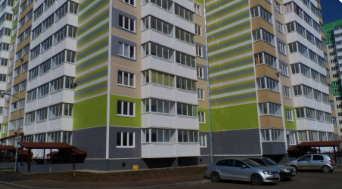
Fig. 11 A mid-rise modular residential building
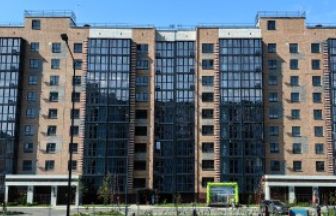
Fig. 12 A modern residence (brick facade with glass curtain wall)
3. Paths in Contrast: OBD's Localized Modularity vs. Hong Kong's MiC for High-Density Rental Housing
With fifty years, 8.5 million m² and 455,000 residents, OBD has made modular construction a part of Kuban life—it is localized, a going concern, and deeply bound to local demand. Hong Kong's MiC advances modular integrated construction for public rental housing within a high-density city—a newer path that can be exited at any time.
From a prefabrication-expert's standpoint, the insight of this contrast is that modularity truly succeeds not by the concept itself, but by a persistently operating industrial organization, an affordable product positioning, and long-term trust built with the local market. The former has kept an industrialized path alive for fifty years; the latter is still being tested.
4. Conclusion: Lessons for Prefabricated Construction
The value of prefabricated and modular construction has never been merely “building fast.” Its real asset is binding manufacturing capability, product quality and a region's housing needs together over the long term—and OBD's five decades are precisely an annotation of such “going concern.” A direction becomes a direction only when it is persistently pursued.
Sources and References
[1] The data, years and enterprise information in this article are taken verbatim from the WeChat article “Russia's OBD 'Localized Modularity' vs. Hong Kong's MiC for 'High-Density Rental Housing': Which Has Greater Influence?” (account “积集向上”) and OBD public materials; no data has been added or altered.
[2] OBD full name АО СЗ «ОБД» (formerly ЗАО «ОБД», Объёмно-блочное домостроение), in operation since 1974.
[3] Information such as Decree No. 282 of the USSR Ministry of Industrial Construction (24 December 1974, annual capacity 108,000 m²) is as stated in the original article.
[4] Figures 1–15 in the text are taken from the original article (including the OBD plant, regional distribution, historical and residential photographs) and are used for technical illustration and reference only.
— Contributed by Shenzhen Wanzhong Xinghua Construction Technology Co., Ltd. for international industry exchange and reference. Contains no commercial promotion.
Industrialized Building Products: Making Houses the Way Cars Are Made
Related Article
